Petroglyph Park B
Nine rock-cut domus de janas and the renowned Branca Tomb, adorned with rare anthropomorphic petroglyphs of strong ritual significance.
Petroglyph Park B
Petroglyph Park B
Contact
Access information
The petroglyph park is located in the Nurighe plain, about 2 km south from the center of Cheremule. Starting from the town center, follow the signs. The archaeological area can also be reached from the SS 131: after taking the junction towards Cheremule - Thiesi, continue for 2.44 km. On the left is the entrance to the road that runs along the Tippiri forest and follow it for 1 km until you reach a crossroads. Here, turn left and follow the signs.
The Tennero necropolis, located south of the Mattarigotza necropolis, consists of nine hypogea, most of which feature simple, horizontally developed floor plans. Among them stands the Branca Tomb (Tomb X), which has been designated as an independent UNESCO monument.
BRANCA TOMB
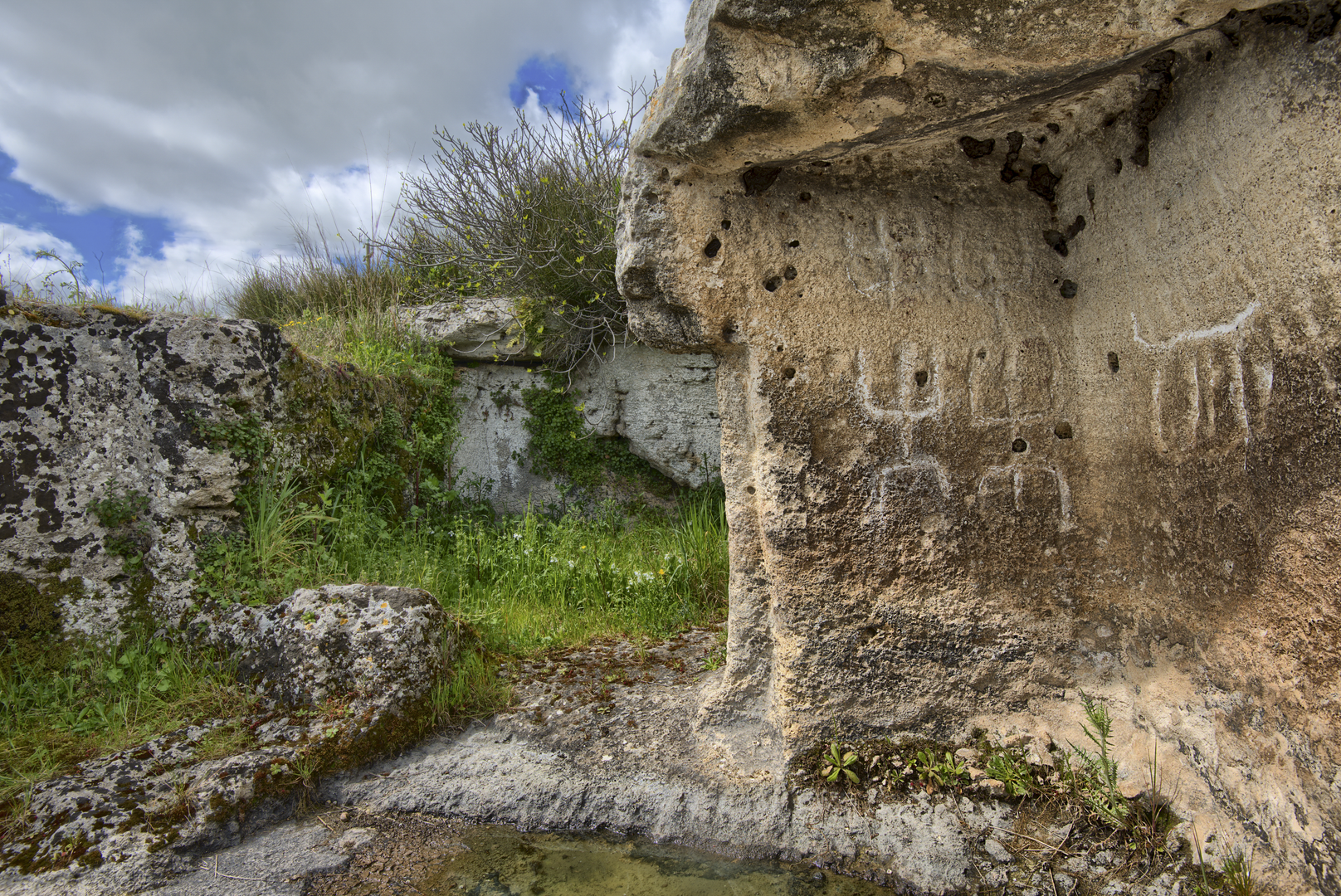
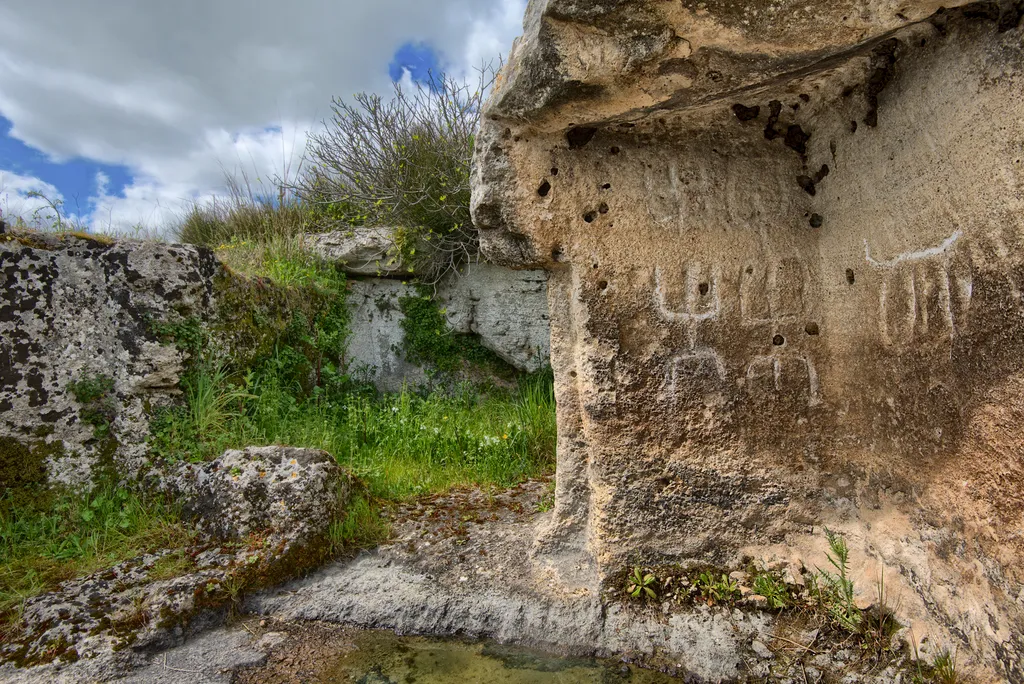
The Branca Tomb, part of the Tennero necropolis and eponymous to the Park, has a simple architectural structure consisting of a single chamber preceded by a dromos ending in a small pavilion. On the walls of this pavilion, a valuable series of anthropomorphic petroglyphs—made using direct percussion—can still be partially observed. Six figures can be seen on the left wall, at least eight on the right, and at least six more appear on the front wall, to the right of the remaining entrance frame.
The monument has lost its roofing, and the section of the wall to the left of the doorway—where additional carvings likely existed—has not survived. Most figures display male attributes, with arms raised in an orant posture. In one instance, some scholars identify an anthropomorph depicted in an "inverted" position, symbolizing the upside-down world of the afterlife.
Contu interpreted the grouped figures as scenes of ritual dances or acrobatic performances linked to funerary beliefs. In the grouping to the right of the doorway, two superimposed anthropomorphs can be observed, with the lower one seemingly supporting the upper figure in the midst of an acrobatic act.